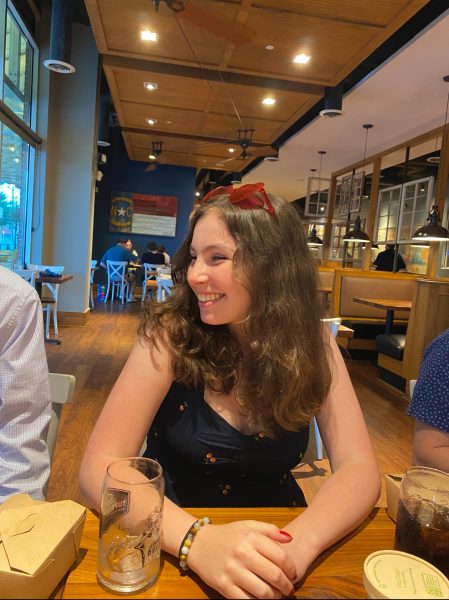
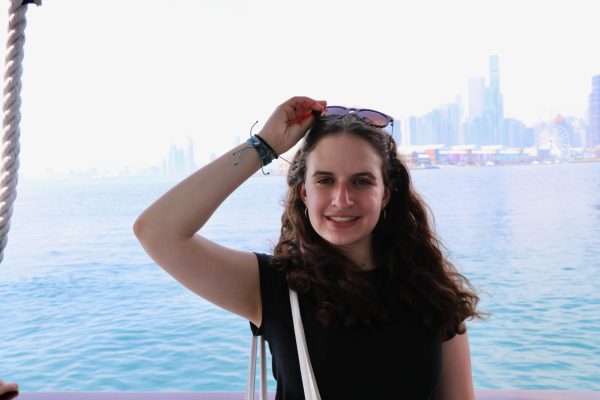
While many Enloe students hope to find their glory in the spotlight or under stadium lights, a few make their mark on the sidelines. We may see their work on Instagram, in the yearbook or hanging on the wall, but we often don’t see their faces. Meet some of Enloe’s student photographers who documented 2025 at The Nest.
Harper Yinger
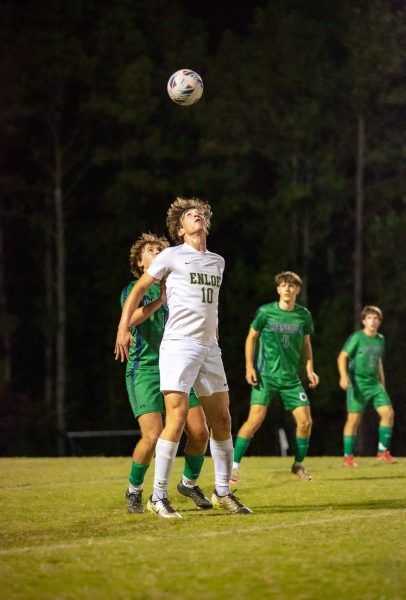
“[Photography] speaks so much, but with no words. It’s very expressive,” said senior Harper Yinger. Photos capture the Enloe spirit, she said, and “you can really see the players’ dedication in the pictures and the work that they put into [their sport].”
Rather than simply showing up at a sports game, Yinger said she frequently goes to a few practices “just to get a feel for what it’s like, until I’m confident enough to know that I’m gonna take good pictures.” Even with her preparation, lighting can present a challenge. “The West Gym has really bad lighting, so it’s really hard to get a good photo,” she said.
“Don’t stop trying,” Yinger advised aspiring photographers. “I know [photography] can be intimidating, but once you get out there … it’s a really, really great way to express yourself and get to know people.”
Brandon Ryzoff
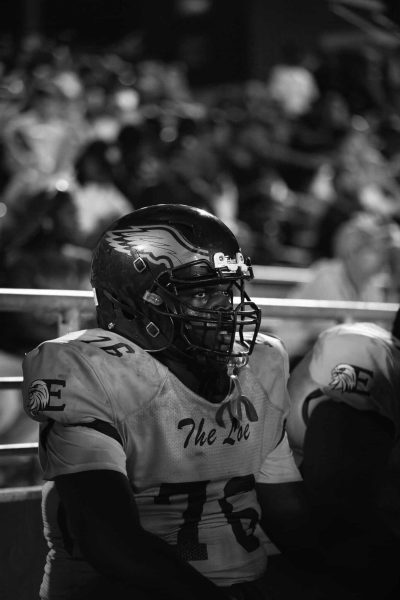
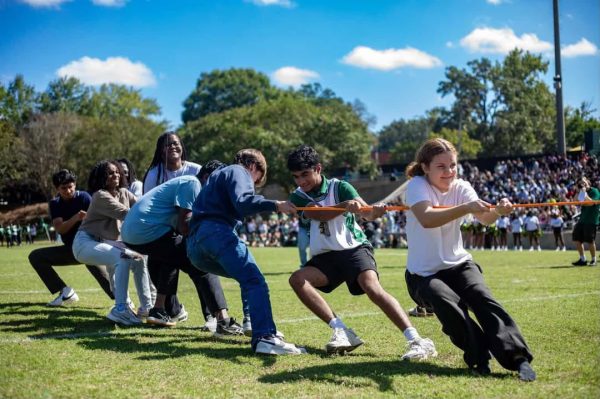
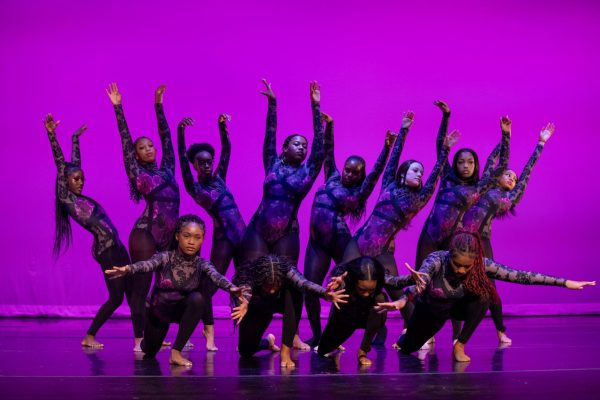
After learning photography from “random YouTube photographers” during COVID, junior Brandon Ryzoff has “been loving it ever since.” For those wanting to start photography, Ryzoff recommends using your phone because it’s “literally the best camera that you have.” While he’s been able to upgrade gear as he progresses, Ryzoff still sees himself as “just spoiled” and thinks it’s “so freaking cool” that you have a camera “in your pocket.”
Starting photography, Ryzoff said he was caught between extremes of taking random photos and fixating on trying to get a perfect shot. However, the balance of “being in the right place and the right time” was difficult. Over time Ryzoff learned that “there’s always something else happening,” so “you have to look [and] you really have to listen.”
Most of Ryzoff’s experience is in sports photography, he said, and he chooses to focus his camera on the action, crowds, and “raw emotions.” To him, emotions “make or break a photo” because they “help you remember moments and help create memories.”
Dane Ellsworth
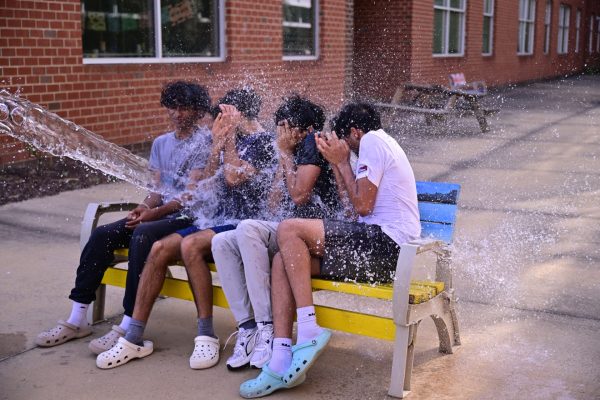
Senior Dane Ellsworth started taking photos because he “could never find a computer wallpaper.” Ellsworth, who has already taken over 74,000 photos this school year, said “the hardest part is being diligent enough to go through them.” Taking inspiration from his father, a fellow photographer, Ellsworth “doesn’t really like to edit” and instead focuses his time on planning and preparation. He and his father once spent “three weeks on eight photos” when capturing the solar eclipse. They researched proper equipment, obtained solar lenses, and set up a timelapse. In the end, Ellsworth left the pictures “completely unedited” and found the final results “absolutely worth it.”
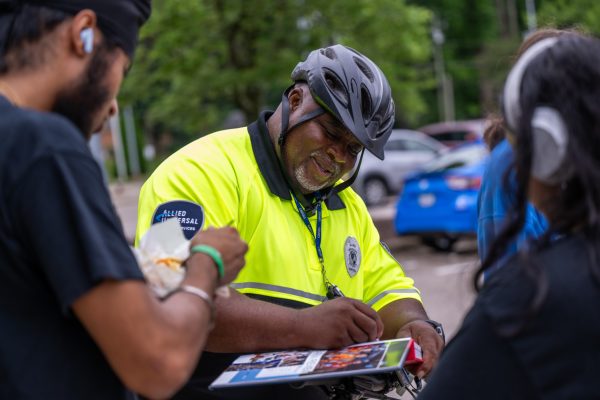
The photo of Bobby is one of Ellsworth’s favorites, he said, because “if you don’t know Bobby, you don’t go to Enloe. He’s everyone’s favorite security guard.” Ellsworth said he finds Enloe great because the smallest things, like talking to a teacher or getting “a signature from your favorite security guard,” are “special to a lot of people.” To him, “any kind of photography can be art” if it captures “a moment or emotion that matters.”
Graham Guzynski
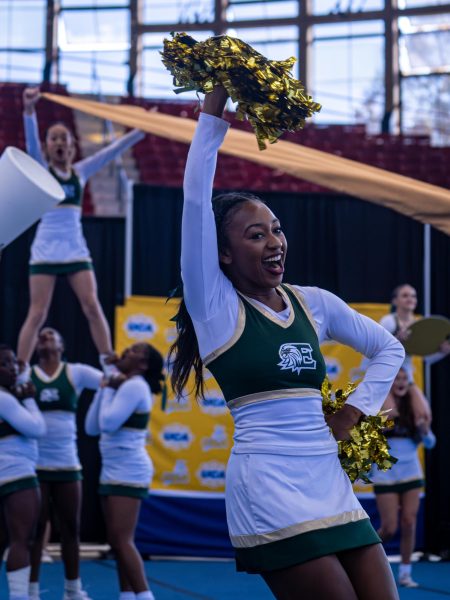
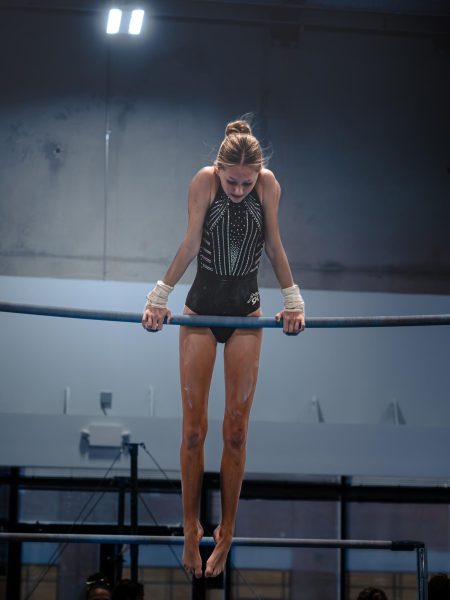
Unlike the other photographers on this list, senior Graham Guzynski isn’t on the yearbook staff. In fact, Guzynski didn’t start photography until the end of last school year. He started taking photos of plants, cats and a few football games, he said, and later began taking photos for Eagle Club. Eventually, his “photos got recognized.”
While he isn’t on the yearbook team, Guzynski still appreciates what they do for Enloe students and their families. “Maybe somebody can’t come see their kid at a dance concert, even if they really wanted to,” Guzynski said, but “having somebody there” taking photos can help.
Guzynski encouraged aspiring photographers to join yearbook. “They shouldn’t be like me,” he said, explaining that the yearbook gives students access to press passes and professional technology.
Fox Jones
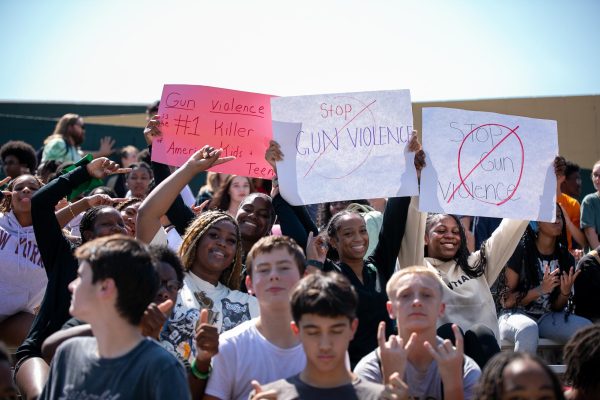
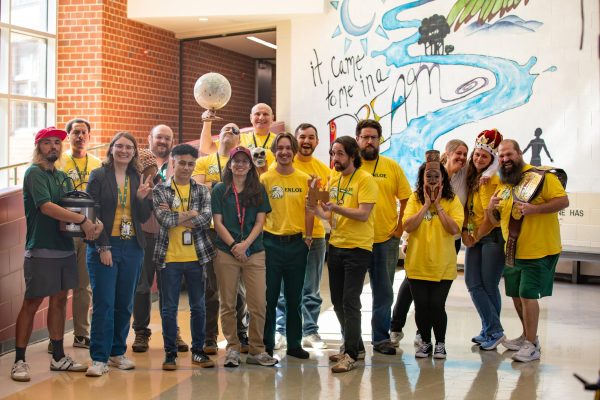
“The hardest part [of photography] is when they kick you out,” said sophomore Fox Jones. In those cases, “I have to get creative,” he added. “Sometimes, I’ll be leaning over a fence taking photos.”
Jones described himself as a “spray and pray” photographer. “I’ll take a lot of pictures really fast … hoping that they turn out [well],” he said. “I’m not trying to miss any moments … I’ll use up all my storage if it means I can get one amazing shot.”
Jones said he likes these photos in particular because of the sense of community they demonstrate. Regarding the photo of the social sciences/history department, “everyone has their items that mean a lot to them, and there’s so much personality in this picture,” he said. “There’s a sense of togetherness that I really like.” The photo of the gun violence protest “tells a story,” Jones said. “It was important enough that we got all of these students in one place, and then [the photo] says why we got them all [there], too.”
To other student photographers, Jones advised not to stop when “someone doesn’t like your photos or because you don’t feel good about them. Just keep going. Anyone can take the best picture of the year … you just don’t know if it could be you.”
Asher Oosten
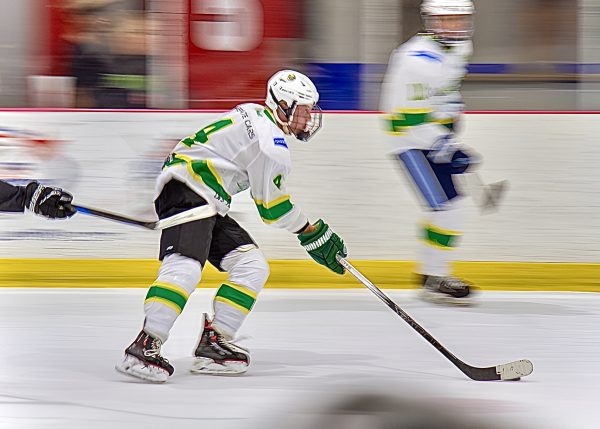
“I’ve taken, for Enloe, I’d guess 10,000 photos now,” said senior Asher Oosten. “And there’s maybe two that I’ve taken that … I’ve actually stopped and stared at for a while.” Oosten said he became interested in photography because he “really wanted to learn how to take photos that you would keep your focus on.” Now, he said his favorite reaction to his work isn’t when viewers compliment it, but when they “stay on it for a second.”
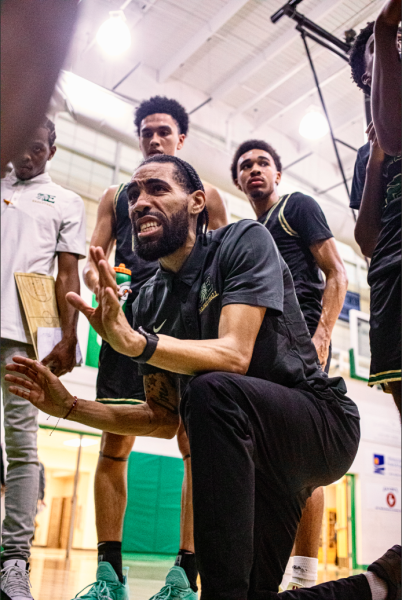
Oosten said he got his start in Enloe photography with men’s soccer. “I had a lot of friends on the soccer team last year, but I wasn’t playing for Enloe, and photography was something I was interested in getting better at … it was really nice to be able to help them … and it helped me out, because I got to stay connected with those people that I didn’t see anywhere else,” he said. After the season ended, he started photographing other teams, and acknowledged the luck that plays into the photos he takes. “Getting people in the right frame, in the right moment … where the ref isn’t in your way, someone else didn’t take the exact same shot, [and] your settings weren’t off, it’s a lot of luck at the same time,” he said. “And then when it comes together into a photo that you can stop and stare at, that’s really nice.”
Though this is Oosten’s last year as an Enloe photographer, “I’m gonna bring my camera wherever I am,” he said. “I don’t want the road to end. It’s not going to end.”
While all of these photographers are artists with their own distinctive styles, they work together to document life at Enloe. Although they each photograph separate events, collectively, they capture the nuances of the Enloe identity.