Everyone watches women’s sports. At least, that’s what media and commerce brand Togethxr promoted in a 2023 T-shirt collaboration with Nike.
Founded by female powerhouse athletes Alex Morgan, Chloe Kim, Simone Manuel and Sue Bird, Togethxr works to promote female representation in sports media coverage. It is just one of the many companies striving to combat sexism in sports, especially pertaining to the prominent disparities in pay, funding and resources.
This imbalance isn’t just evident to professional athletes, but is also noticeable to sports fans and players of various ages, including high schoolers.
Generally, “there are times that men playing the same sport are treated better, or they have more resources, or just more money is spent towards them being able to play,” said junior Alicia Okonkwo, who plays varsity soccer and runs track at Enloe, and is committed to a Division I university for soccer. “Why can’t we have the same things?”
Women In Sport is a long-standing charity that challenges gender stereotypes hindering women’s participation in sports. The company’s motto is “Because women & girls belong.” Similarly, Women’s Sports Foundation funds research, promotes female athletes and educates others on how to create lasting, positive change in women’s sports. Women Leaders In Sports and WISE, which stands for Women In Sports + Events, both strive to instate women in more executive athletic roles so they can make decisions to create systematic and sustainable change in the industry. Just Women’s Sports is a digital media company that solely covers women’s sports through articles, videos and podcasts. It works to close the notable gap in coverage between men’s and women’s sports.
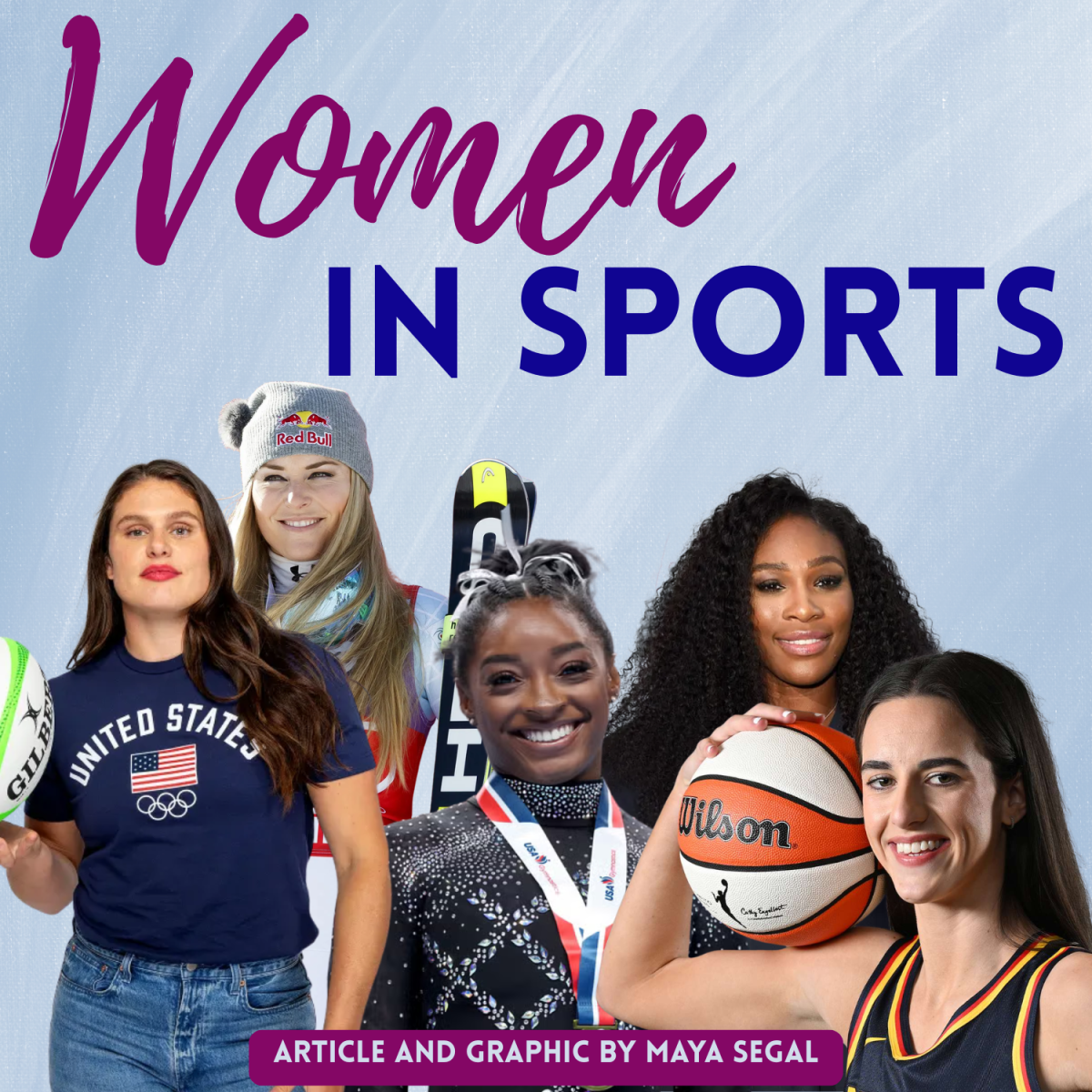
In addition to the efforts of organizations, individual athletes are creating waves in women’s sports as well. Immensely decorated athletes like tennis players Serena and Venus Williams, swimmer Katie Ledecky and skier Lindsey Vonn have drawn millions of viewers, attracting significant attention to women’s sports as a whole. In 2024, Caitlin Clark became the highest female scorer in NCAA history and brought the Iowa Hawkeyes to the title game of March Madness. This fueled the rise in popularity of women’s basketball so much that the phenomenon was deemed the “Caitlin Clark Effect.” As viewership increases in a sport, so does the money invested into it. Thus, by garnering attention, prominent female athletes are also generating funds for their respective sports. Clark alone was responsible for roughly 26.5% of the WNBA’s economic activity in the 2024 season.
“Viewership helps to increase the money that’s going into these sports,” Okonkwo said, “but it’s also showing sponsors [and] people in charge that people actually want to watch this.” This helps “all the other levels of female sports,” she added, referring to divisions such as college, high school and youth recreation, “because if there’s more money at the top, then it disperses to the rest.”
Many female athletes aren’t just achieving extreme success on the field, but are also using their platforms to promote change. Gymnast Simone Biles, for example, has advocated widely for the destigmatization of mental health issues following her experience with a severe mental block at the Tokyo Olympics in 2021. Tennis player Naomi Osaka has also been open about mental health, even appearing on the cover of Time magazine in 2021 with the quote “It’s O.K. not to be O.K.” Rugby player Ilona Maher went viral on social media around the time of the 2024 Paris Olympics, and has since used her large online presence to champion feminism, self-confidence and body positivity in all aspects of life, including women’s sports.
Yet it’s not just the women on the field striving for change in sports overall, but those behind the scenes, too. Gayle Benson, owner and CEO of both the New Orleans Saints and the New Orleans Pelicans, wields significant financial clout in the NFL and NBA ecosystems. While Benson is the only woman to control teams in both leagues, Michele Kang has taken a different approach, focusing on one sport on an international scale. Kang owns three women’s soccer teams in three different countries, and believes women’s soccer team valuations will soon reach at least one billion dollars. Historically, sports leadership has been dominated by men, so women like Benson and Kang are defying social norms and paving the way for more female leaders to gain positions of power in sports.
In addition to the women who control sports teams directly, many others steer some of the companies that drive the industry from the sidelines. Amy Montagne is the president of Nike, a company that dominates over 40% of the global sportswear market and whose endorsement decisions hold significant sway for athletes and teams. Rosalyn Durant is in charge of ESPN’s programming and acquisitions, meaning she chooses which sports reach massive audiences and which remain unseen. With these positions, Montagne and Rosalyn have the power to lift female athletes and women’s sports teams, increasing their visibility and chances of success.
Still others hold notable power not in teams or companies, but in the governance of the leagues. One such example is Jessica Berman. In three years as commissioner of the National Women’s Soccer League, she negotiated a $240 million media rights deal, and attendance surpassed two million people and viewership rose almost 300% under her watch. Berman also eliminated the draft, giving athletes control over where they sign and thus shifting the power from owners to players.
People should pay more attention to sports executives, Okonkwo said, because “they’re the ones that are setting women’s sports up for either success or failure, so knowing who’s in charge and what their role is is kind of important.”
The industry needs more female sports executives, Okonkwo added, because “they know the struggles or challenges [of a female athlete] better than maybe a male [executive] would.”
Not only can women’s sports promote gender equality and combat sexism, but they are also important for representation. A recent Parity Now survey found that 88% of sports fans consider professional female athletes to be impactful role models for young women. When girls see a professional female athlete playing a sport they are passionate about, they can be motivated to keep playing. These female athletes can also suggest that women are just as strong and skilled as men, encouraging the younger generation of girls not to believe stereotypes that preach otherwise. Furthermore, female athletes can promote overall well-being and a healthy body image, which many young girls struggle with.
Male athletes “tend to be more popular because there’s more representation for male sports,” Okonkwo said, so “both females and males are looking up to male stars … [but] why can’t there be more female representation, too?”
She specifically mentioned representation regarding female coaches.
In “club, high school and professional [levels], you just don’t see as much female representation [among] coaches. And that’s something that obviously needs to change,” she said, because “a female coach is able to know the challenges you face more, so they’re able to adapt to that.”
Ultimately, Okonkwo said she hopes the world of women’s sports will grow in the future, and encouraged people to recognize its equality with men’s sports and support the field.
“If you watch female sports, you’re supporting a greater cause,” she said. “And by doing that, you get to set up the future for maybe your own … daughters, or your sisters or other female[s] in your life.”