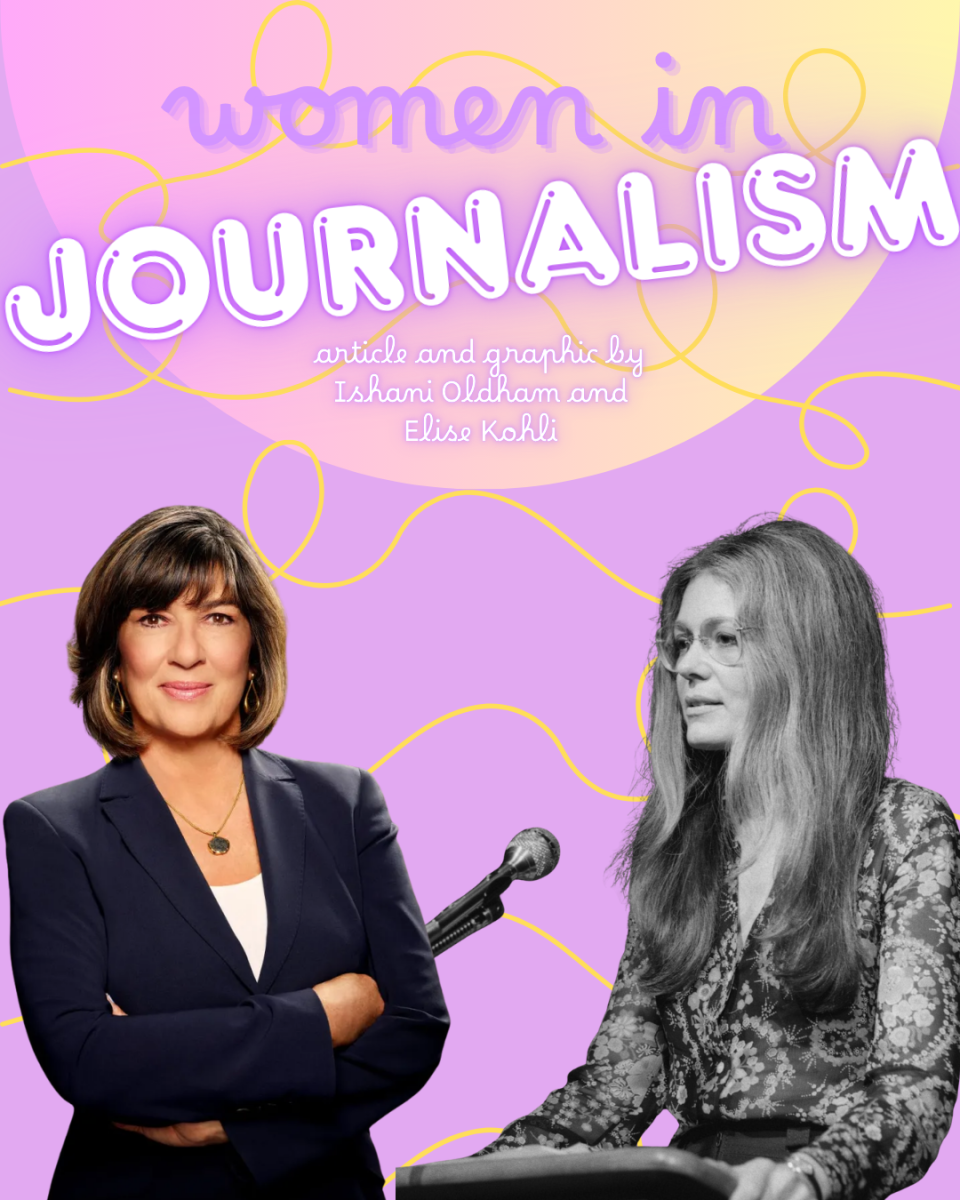
From local legends to historical heroes, The Eagle’s Eye has compiled a list of some of the countless women who have worked to make journalism accessible for all. Enjoy!
Ida B. Wells
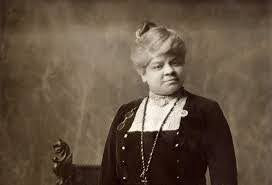
In 1891, Ida B. Wells began to write articles demanding improved education for Black children. This initial foray into the field of journalism would result in a revolutionary career that would set the precedent for Black women in media.
As the editor of The Memphis Free Speech and Headlight, a local Memphis paper that unapologetically amplified Black voices, Wells wrote an infamous column criticizing the justification of lynchings. When she exposed the rape accusations held against the victims were false, the paper began to receive threats. Wells would go on to travel the South, writing investigative reports on hundreds of lynching victims, uncovering the truth about their lives and rebuking false allegations. Wells compiled these works into a book titled “A Red Record”. The publication of this book incited threats of violence and several realized attacks on her office. After publishing an editorial regarding the “Curve Riot,” which was in reality not a race riot but an attack on a Black-owned grocery store, The Memphis Commercial called Wells a “Black wench” and called for “retaliation.” To escape the danger of staying in Memphis, she moved to Chicago.
In Chicago, Wells founded the Alpha Suffrage Club, one of the first Black women’s suffrage organizations. She is perhaps best remembered for her involvement in the founding of the National Association for the Advancement of Colored People (NAACP). Her legacy lives on in her humanitarian efforts and groundbreaking journalistic work.
http://tennesseeencyclopedia.net/entries/memphis-free-speech/
https://www.britannica.com/video/ida-b-wells-biography/-273992
María Elena Salinas
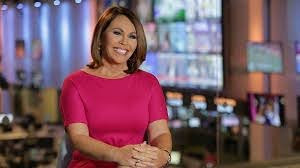
Widely regarded as the “voice of Hispanic America”, María Elena Salinas uplifts stories that are overlooked by the English-speaking media.
She began her career in 1987 as an anchor for the Spanish-language news channel Noticiero Univision. Throughout her time in this role, she interviewed presidents, international leaders, and Hispanic celebrities. Salinas would go on to write a decade-long column in Spanish and English, and receive several awards for her work on Noticiero Univision.
Notably, she received an Emmy Award for Lifetime Achievement in 2012. Later, in 2014, she received the Peabody Award for her documentary “Entre el Abandono y el Rechazo.” This news special cast light on children throughout Central America who are seeking asylum in the US to flee rampant gang violence. Salinas specifically employs footage from Honduras, El Salvador and Guatemala, confessionals from mothers who sent their children on the journey north alone out of desperation, and even interviews with two Central American presidents. Also in 2014, Salinas was inaugurated into the National Association of Hispanic Journalists, a foundation she helped to establish.
https://latinomedianetwork.com/leadership/maria_elena_salinas/
https://www.calstate.edu/impact-of-the-csu/alumni/Honorary-Degrees/Pages/Maria-Elena-Salinas.aspx
Susan Goldberg
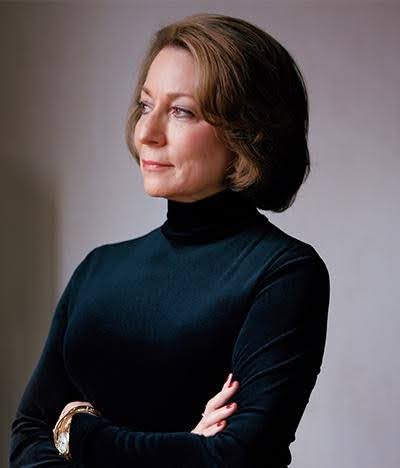
The first woman to hold the position of Editor in Chief of National Geographic, Susan Goldberg, is a pioneer. She got her start in Seattle, but went on to lead the newsrooms at The Cleveland Plain Dealer and The San Jose Mercury News. She was the first woman to hold this role at both publications. While she was working on The San Jose Mercury News, Goldberg aided in the coverage of the Loma Prieta earthquake, coverage that earned the paper a Pulitzer Prize.
In 2014, Goldberg took on the role of Editor in Chief of National Geographic, and in 2017, under her leadership, National Geographic published the landmark “Gender Revolution” issue. The issue explored the intricacies of how gender affects individuals across the globe. It garnered criticism and praise alike, but ultimately, it earned several media awards and tackled a concept in a careful manner that was ahead of its time.
https://giftplanning.msu.edu/why-we-give/susan-goldberg
https://www.nationalgeographic.com/expeditions/experts/susan-goldberg/
https://www.nationalgeographic.com/magazine/issue/january-2017
Liza Roberts: founder of WALTER

A graduate from Hamilton College and the Columbia University School of Journalism, Liza Roberts made a name for herself in Raleigh when she founded Raleigh’s renowned arts and culture magazine, Walter in 2012. Her 2022 publication Art of the State covered a large swath of North Carolinian culture and art. This book was heavily influenced by her time working at Walter, as well as her love for North Carolina’s unique cultural identity. “The book is probably the truest to who I am and what I care about, not only because it’s about art…but also because it’s about North Carolina, where we have lived for [19] years and it’s become a place that I am devoted to and want to help support and grow however I can,” she told the Daily Tar Heel.
https://downtownraleigh.org/do/artspace-and-and-the-art-of-the-state-author-talk-with-liza-roberts
Christiane Amanpour: Iranian TV host
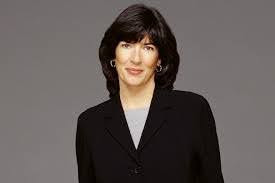
The daughter of an influential Iranian airline executive whose life was uprooted by the Islamic revolution and the toppling of the Shah, Christiane Amanpour is now the highly decorated chief international correspondent at CNN. She is also currently hosting a nightly interview program called Amanpour on CNN.
Amanpour rose to prominence due to her coverage of the Persian Gulf War in 1990. However, as described by Amanpour, her most significant coverage was that of the Bosnian War in the mid-1990s. She faced criticism for her “apparent” bias, but has since defended herself, saying, ‘Where you [have] ethnic cleansing -genocide- you have a duty to call it like it is.”
In her documentary “Where Have All the Parents Gone?” Amanpour covered the AIDS crisis in Kenyan slums and villages, specifically on the one million children who, at the time of her reporting, were orphans as a result of AIDS.
Across her career, Amanpour has continued to establish herself as a dedicated advocate for refugees and is a prominent figure in international relations that every journalist should look to for inspiration.
https://www.britannica.com/biography/Christiane-Amanpour
https://www.theguardian.com/media/2006/jul/13/broadcasting1
https://www.wttw.com/playlist/2017/12/08/christiane-amanpour
Conclusion
We hope you will walk away from this article with a newfound appreciation and knowledge of the many women who have made the diverse and inclusive field of journalism we know today possible.